
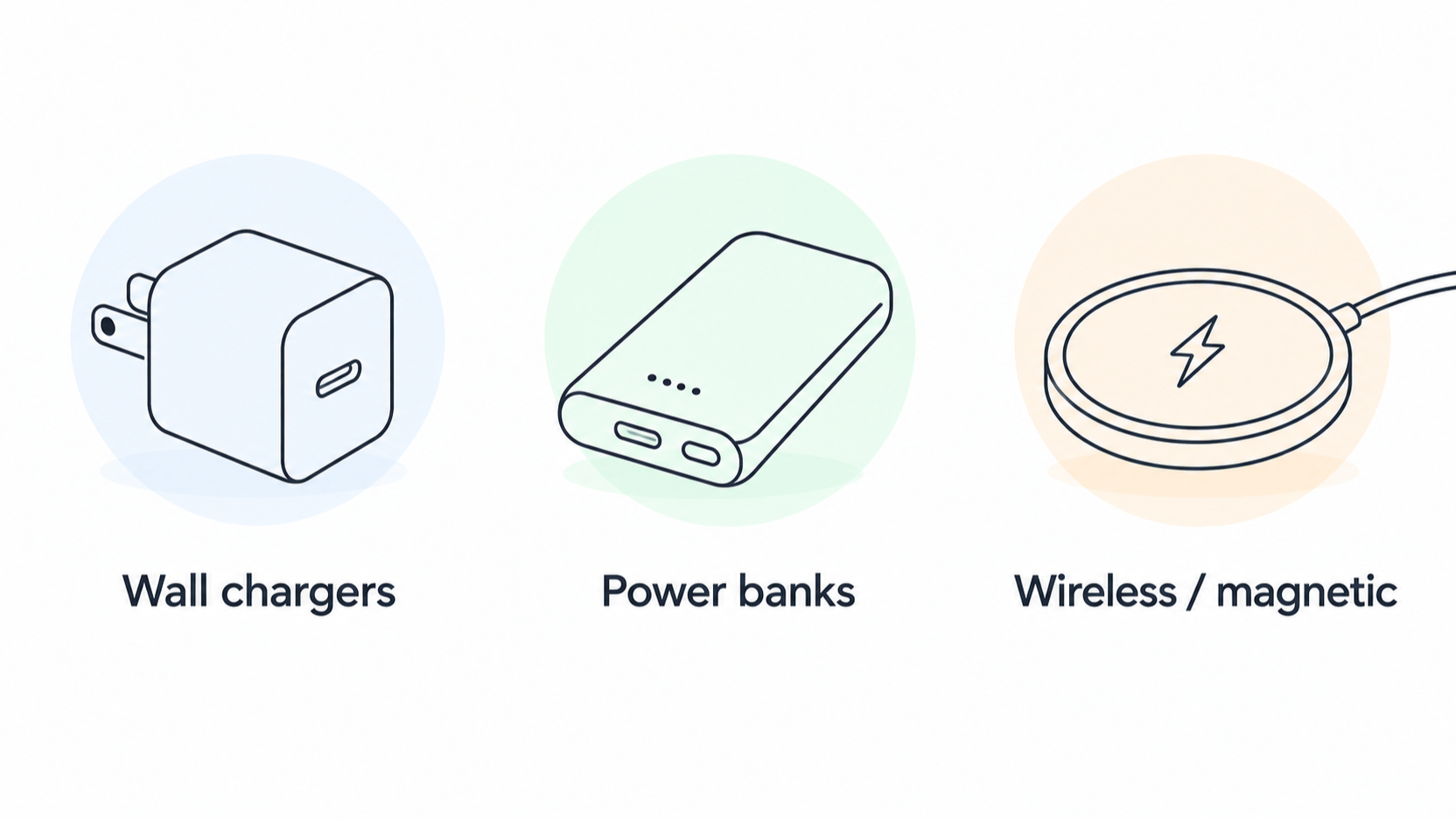
| Check | Anker | Belkin |
|---|---|---|
| Current costs and conditions | Check the official terms | Check the official terms |
| Product scope and intended use | Verify against your needs | Verify against your needs |
| Limitations and service | Compare current details | Compare current details |
The Short Verdict
Anker looks like the stronger fit if you want high wattage, laptop-capable power banks and a wide range to choose from. Belkin looks like the better match if you mainly charge a phone and want plain-English buying guidance. This verdict rests on published specifications, official brand pages and independent editorial roundups. We have not hands-on tested any of these products.
- Phone only: Either brand can do the job. Belkin's own guidance says 20W to 30W covers phones and dash cams, and that 10K to 20K power banks suit most people.
- Laptop and multi-device: Anker is the better-evidenced choice. Wired's top pick is the 165W, 25,000mAh Anker Laptop Power Bank, and Anker's wattage filters run up to "above 200W".
- Magnetic wireless: Both brands offer magnetic or Qi2-style charging, so choose by specific model rather than by brand.
- Travellers: Check airline rules and the power bank's rating before you fly.
Some gaps could change this verdict. Belkin warranty terms and model-level Belkin specifications are not in the evidence we reviewed.
What Anker and Belkin Each Offer
AI-generated generic editorial illustration — not a retailer product photo and does not depict the reviewed product or service. Editorial illustration supporting this section.
Anker's charger range is organised by total output (below 100W, 100W to 200W and above 200W), port type, port count and device compatibility. The brand also highlights its GaNPrime technology. Its power banks can be filtered by capacity (under 10,000mAh, 10,000 to 21,000mAh and over 21,000mAh), charging speed, and features such as MagSafe and magnetic, built-in cable and pocket-size. Among its best sellers are the 25K, 165W Anker Laptop Power Bank and the slim 10K Anker MagGo.
Belkin organises its site differently. Its navigation lists wireless chargers, power banks, chargers, docks and hubs, alongside travel and Apple-oriented accessories such as AirTag and tablet accessories. Its buyer guides are written for everyday and travel use rather than as spec catalogues.
In short, Anker's pages lean towards a filterable, wattage-led range, while Belkin's lean towards guidance for phone and travel buyers. This comparison covers only what the cited official pages and editorial sources state.
How This Comparison Was Built
AI-generated generic editorial illustration — not a retailer product photo and does not depict the reviewed product or service. A numbered checklist summarising how the comparison was built: evidence base, what was not tested, source weighting, dated sources.
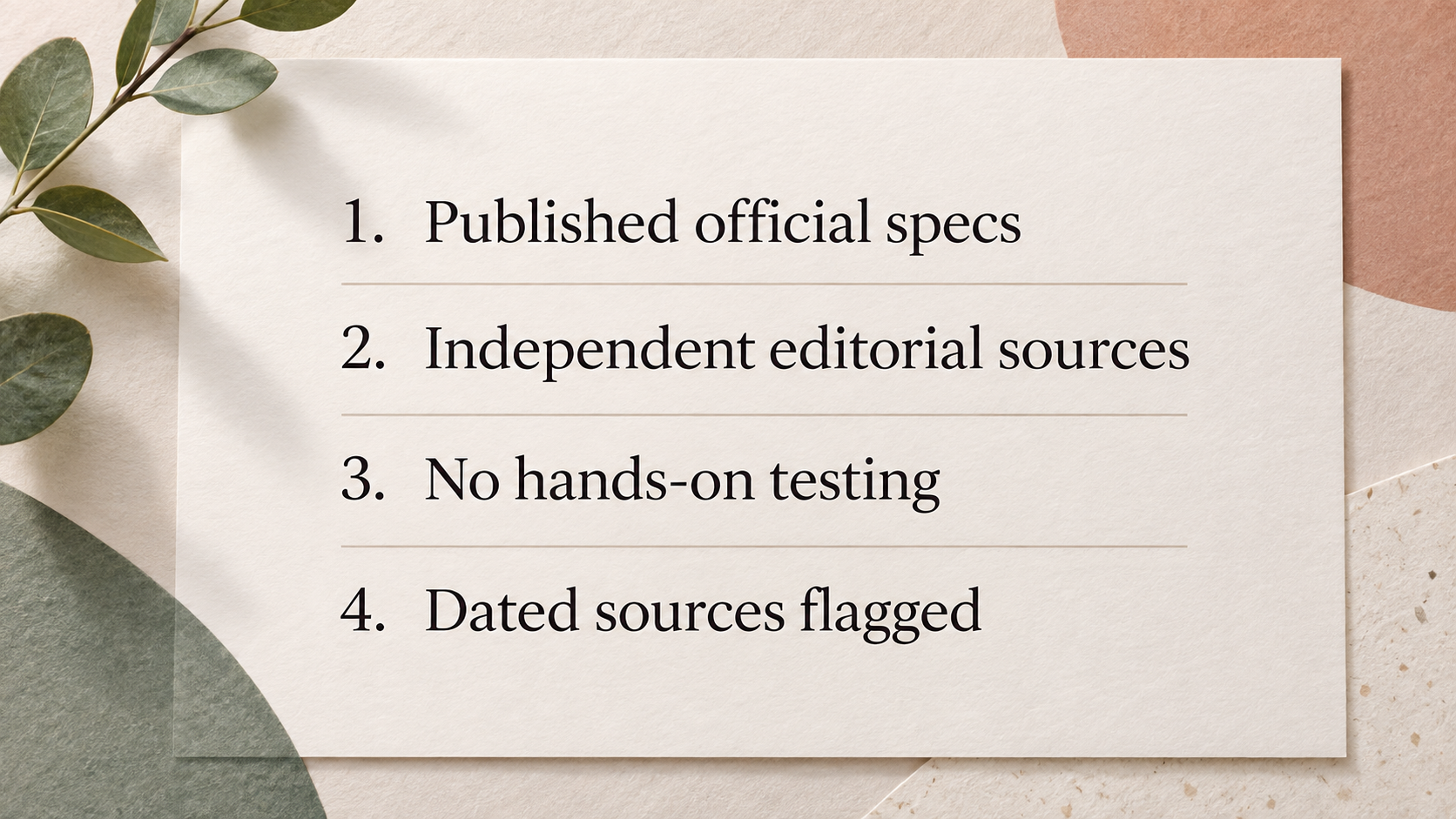
The guide draws on three kinds of source: official brand product pages, Belkin's warranty and support pages, and independent editorial roundups from Wired, ZDNet and CNET. We make no claim of personal hands-on testing.
Source types are weighed differently. Brand pages describe their own products, so we treat them as claims rather than independent verification. Wired's roundup is dated July 2026 and its author says they have tested more than 100 power banks. The ZDNet and CNET pieces carry 2023 update dates, so we treat them as older context.
We compare the brands on five criteria: wattage, capacity, port layout, wireless and magnetic options, and warranty and support. Specifications, prices and availability change, so check the current product pages before buying.
Wattage and Capacity Compared
Wattage decides what a charger can power. Belkin's guidance says USB-C wattage runs from 15W to 100W. It calls 20W plenty for phones and dash cams, and suggests 30W for tablets and high-end phones. Apple recommends 20W USB-C PD or higher for iPhones, and PPS support can help optimise charging.
On the high-wattage end, Anker has the clearer published evidence. Wired describes the Anker Laptop Power Bank as 25,000mAh, delivering up to 165W across two devices, or 100W to a single device over USB-C. Anker's own pages list a 100W to 200W band and an above-200W band for chargers, which signals a broader high-wattage range.
For capacity, Belkin says 10K and 20K are the most common power bank sizes. It says a 10K bank gives about one and a half iPhone 14 charges, or a phone plus accessories such as headphones.
The evidence does not give model-level Belkin wattage figures. For a like-for-like comparison of specific models, use the current product pages.
Port Layout and Compatibility
AI-generated generic editorial illustration — not a retailer product photo and does not depict the reviewed product or service. One row of four labelled icons for the port-layout factors the section covers when charging several devices at once.
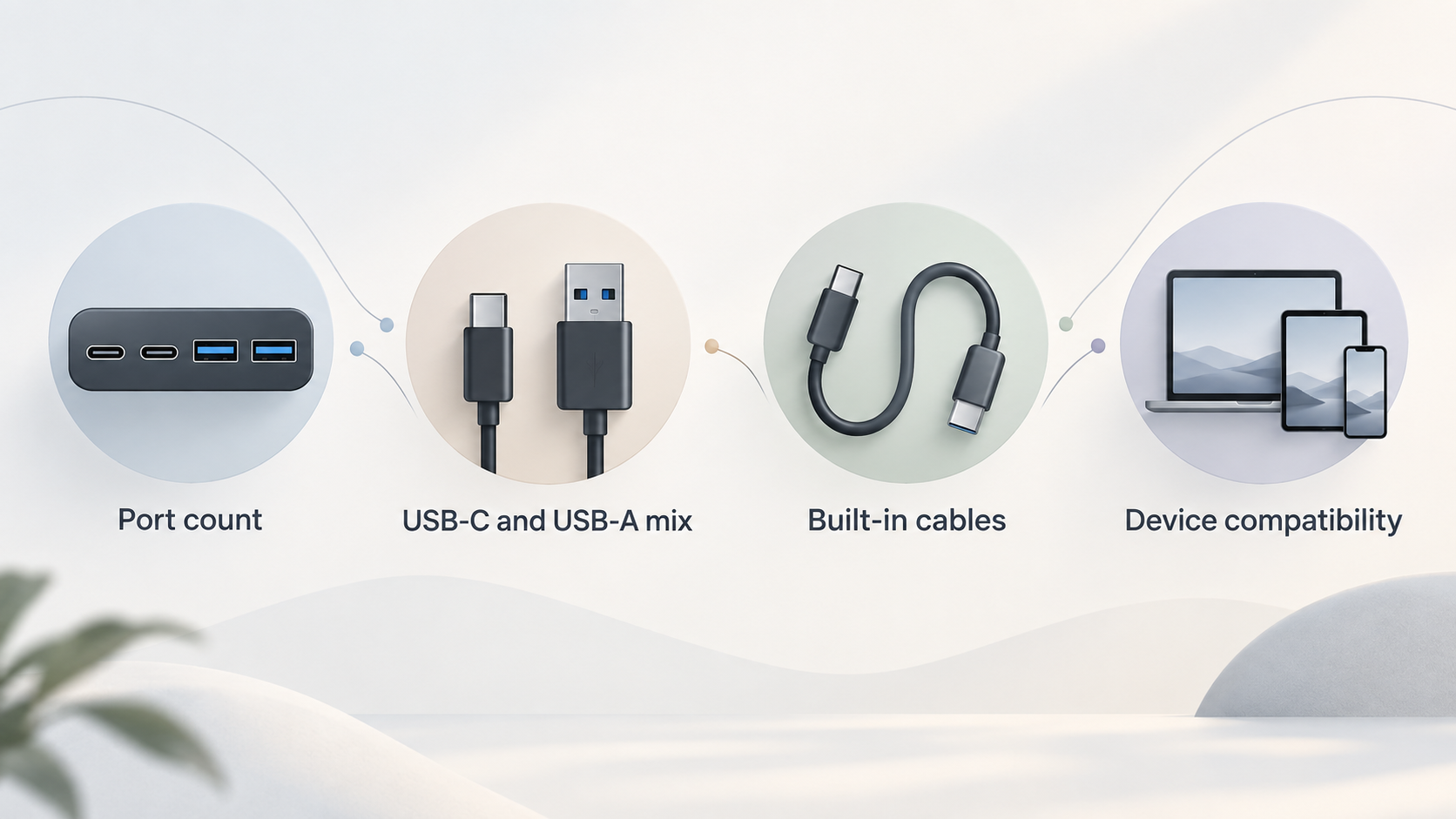
Port layout matters most when you charge several devices at once. Anker's catalogue filters by USB-C, USB-A or both, and by 1 port, 2 to 3 ports or more than 3. That suits multi-device households. Its collection pages also advertise certified compatibility and filters for phones, tablets, laptops and multi-device use.
Built-in cables are another practical point. According to Wired, the Anker Laptop Power Bank has a retractable 2.3-foot USB-C cable and a braided 1-foot USB-C cable, so for many uses you need no separate cable.
Belkin advises counting extra ports against the number of devices you charge, and looking for PD and PPS where relevant.
Remember that a power bank's output is shared. The Anker Laptop Power Bank's 165W is split across two devices, and a single USB-C device gets 100W. Read single-port and multi-port figures separately.
Belkin's port layouts for specific models are not in the evidence set. Check them on its product pages.
Wireless and MagSafe Options
Wired picks the Anker MagGo Power Bank (10K, Qi2) as its best MagSafe/Qi2 portable charger. Anker's power bank collection includes a MagSafe and Magnetic filter, which shows a dedicated magnetic range.
Belkin's guidance says iPhone 12 and later support magnetic wireless charging. It adds that a magnetic power bank suits someone charging a single iPhone 14. Its site also lists a dedicated wireless chargers category.
Magnetic charging is usually more convenient, but it is generally less efficient than a cable. For a fast top-up, wired USB-C PD is the safer choice. That is a general caution, not a tested finding.
The evidence does not support a head-to-head speed ranking between Belkin and Anker magnetic products. Confirm Qi2 or MagSafe support on the exact model you are considering.
Warranty and Support
AI-generated generic editorial illustration — not a retailer product photo and does not depict the reviewed product or service. A short numbered checklist of what to confirm about warranty, returns and support before buying, as the section states.
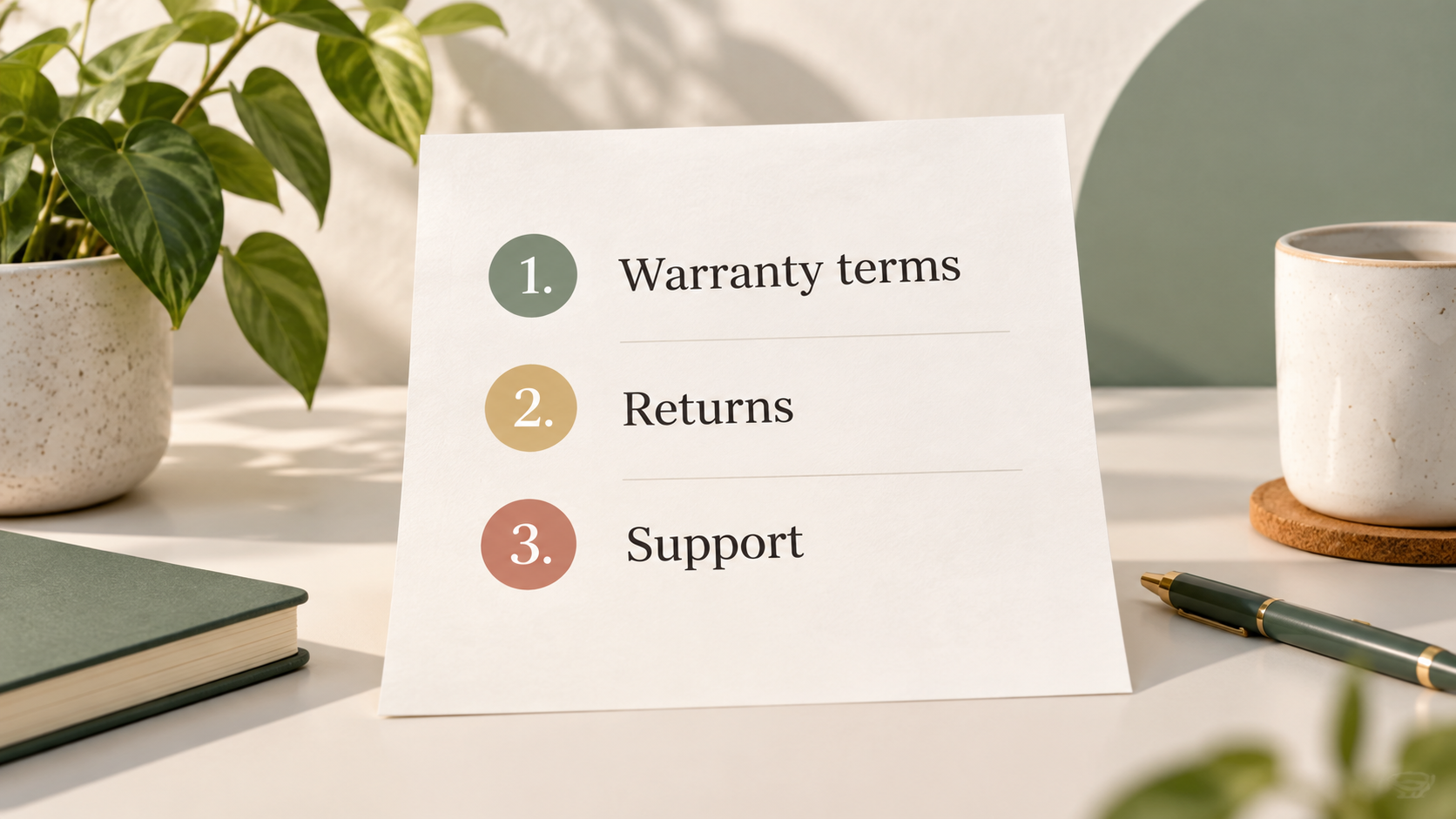
Anker's pages advertise a hassle-free warranty, a 30-day money-back guarantee, free shipping and lifetime customer support. These are marketing claims, so check the exact terms before relying on them.
Belkin runs a dedicated Warranty Center, with support links for product registration, recalls, warranty exchange and shipping returns. The excerpt we reviewed does not state warranty periods or per-product terms, so we make no claim about duration.
Registration, recall and returns pages matter as much as the headline warranty length. They show how a claim works in practice.
Both sets of pages we reviewed are US-facing, and Belkin's page shows a United States region setting. Confirm current UK terms with each brand before you buy.
Where Anker and Belkin Are Strongest
Anker's evidenced strengths are high-wattage, laptop-capable power banks, a wide and filterable range, and compact GaN chargers. It also has a strong editorial presence. Wired's best overall pick is Anker's, and CNET picked the Anker Nano Pro 521 as its best compact USB-C phone charger. CNET describes that two-port GaN unit as much better than conventional phone chargers, though the review dates from 2023.
Belkin's evidenced strengths are clear, plain-English buyer guidance, an Apple and iPhone-oriented accessory range, and a travel focus. It also gives a stated safety message: buy from a reputable brand that displays compliance markings such as CE and UKCA. Belkin says its power banks come fully charged out of the box.
These strengths come from the stated sources, not from hands-on testing. Anker suits high-wattage and multi-device buyers. Belkin suits phone-centred and travel buyers.
Limitations and Evidence Gaps
High-capacity, high-wattage power banks tend to be heavier. ZDNet's 2023 list calls the large-capacity Zendure SuperTank Pro heavy and expensive. That is a category-level caution, not a finding about Anker or Belkin.
Anker's official pages are promotional, and no independent testing in our evidence set directly compares Anker and Belkin. There is also little model-level Belkin data. We have no wattage tables, port maps or warranty durations for it.
Some editorial sources are dated 2023, so models and prices may have changed. Belkin's guidance is partly UK-oriented, with its CE and UKCA advice, but the pages we cite are US-facing. UK availability and terms need checking.
Alternatives Worth Considering
Look beyond Anker and Belkin for niche needs such as extreme capacity, design or four-port desktop charging.
- Nimble Champ (Series 2): Wired recommends it as a smaller power bank.
- Sharge Shargeek 170: Wired's pick for the best-looking power bank.
- Zendure SuperTank Pro: ZDNet's older list favours it for large capacity and flight-safe laptop charging. It has four USB-C ports and no USB-A.
- Satechi 165W 4-port USB-C GaN charger: CNET's list includes it as a multiport option.
- Apple and Samsung chargers: Apple recommends 20W USB-C PD or higher for iPhones, so a first-party charger or any compliant 20W charger works. First-party chargers also suit readers who want an exact match. We have no Samsung specifications in the evidence, so we quote no figures.
Which Should You Choose
- Phone only: You need 20W to 30W and a 10K power bank. Either brand can supply that.
- Laptop and multi-device: Favour the higher wattage bands. Anker's published range is better evidenced there.
- Magnetic wireless: Confirm Qi2 or MagSafe support on the specific model.
Before buying, check these points:
- Single-port versus shared output.
- The mix of USB-C and USB-A ports.
- Current warranty terms.
- Flight-safe capacity, if you travel.
This framework is guidance drawn from published specs, not a tested ranking.
Frequently Asked Questions
How many watts do I need to charge my phone, tablet or laptop?
Belkin says 20W is plenty for phones, and 30W may suit tablets and high-end phones. Apple recommends 20W USB-C PD or higher for iPhones. Laptops need more. Wired's top pick delivers up to 165W, or 100W to a single USB-C device.
What size power bank should I buy for travel?
Belkin says 10K and 20K are the most common sizes. A 10K bank gives about one and a half iPhone 14 charges. Check airline rules and the power bank's rating before flying. Wired and ZDNet mention flight-safe models, but that is not a universal guarantee.
Is a MagSafe or Qi2 power bank as fast as using a cable?
Generally not. Magnetic charging is more convenient but usually less efficient than a cable, so wired USB-C PD suits fast top-ups. Our evidence does not rank Belkin and Anker magnetic products by speed.
Are Anker and Belkin chargers safe, and what should I check on the label?
Belkin advises buying from a reputable brand that clearly displays compliance markings such as CE and UKCA. Look for those marks on the product or its listing.
Which brand has the better warranty and support?
We can't say. Anker advertises a hassle-free warranty, a 30-day money-back guarantee and lifetime customer support. Belkin has a Warranty Center, but the excerpt we reviewed gives no durations. Check each brand's current UK terms.
Sources
- Official source
- Official source
- Official source
- Official source
- Official source
- Independent guidance
- Independent guidance
- Independent guidance
Related reading
- Best USB-C power banks for everyday carry: evidence-led top choices
- Anker charging review: power banks and chargers, strengths, limits and alternatives
- Belkin charging review: who it suits and who should skip it
- How to choose a USB-C charger: wattage, ports and safety
Editorial information: About our editorial team · Read our editorial policy · Read our affiliate disclosure.