
Belkin as a Charging Brand at a Glance
AI-generated generic editorial illustration — not a retailer product photo and does not depict the reviewed product or service. Editorial illustration supporting this section.
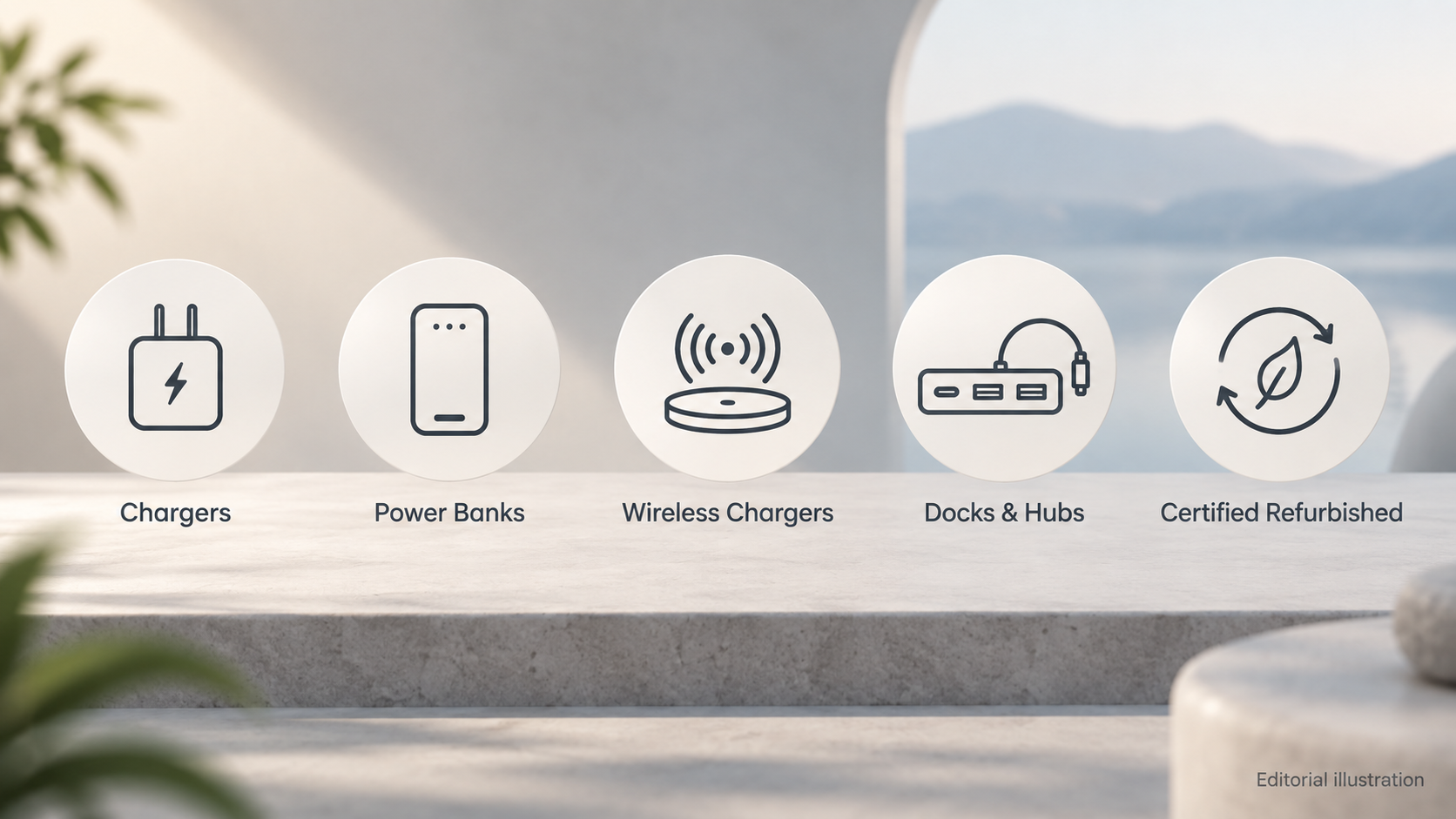
Belkin describes itself as a global technology company that grew from a garage in 1980s Southern California and is now headquartered in Los Angeles. For charging, its own site navigation lists four relevant product groups: wireless chargers, power banks, chargers, and docks and hubs. It also lists a Certified Refurbished category.
If you are choosing a wall charger, a power bank or a magnetic wireless charger for a phone, tablet or laptop, Belkin is a name you will meet often. The question is whether its range and published guidance fit what you own and what you want to spend.
One thing to know before reading on: this is editorial buying guidance drawn from official Belkin pages. It is not a record of personal testing. Where Belkin's pages are silent, dated or simply promotional, we say so rather than fill the gap.
What the Belkin Charging Range Covers
Belkin's site groups its charging products into wireless chargers, power banks, chargers, and docks and hubs. Here is how those categories line up with what Belkin's own buying guides discuss.
- Wall and car chargers. Belkin's travel buying guide covers USB-C wall chargers and car chargers, including what to consider for an iPhone and for a dash cam or tablet.
- Power banks. Its power bank guide discusses 10K and 20K mAh sizes, and magnetic attachment for charging a single iPhone.
- Wireless and magnetic chargers. The travel guide notes that iPhone 12 and later can use magnetic wireless charging, which it says saves you losing cables in a suitcase.
- Docks and hubs. These appear as a category in Belkin's site navigation. The pages we reviewed do not go into detail on them.
- Certified Refurbished. Belkin lists this as its own category. We have not seen its terms, so check the live page before relying on it.
We do not name specific models, prices or wattages beyond what these pages show. Belkin's range changes, so treat this as a map of categories rather than a product list.
Where Belkin Looks Strong
Every point below comes from Belkin's own pages, so it reflects the company's stated approach rather than independent proof.
Stated testing. Belkin says its products go through multiple tests for strength, durability and usage before release. It also says its research and development and engineering are US-based and in-house, and it presents performance, safety and design as brand pillars. These are company claims, and we have not verified them.
Plain-English guidance. Belkin's buying guides explain wattage, Power Delivery (PD) and PPS in everyday terms. They say a 20W or higher USB-C PD charger suits iPhones, in line with Apple's recommendation. A buyer can use that knowledge with any brand.
A sensible safety prompt. The power bank guide advises buying only from a reputable brand that clearly shows compliance marks such as CE and UKCA. That is relevant to UK readers.
Visible support pages. Belkin publishes a dedicated Warranty Center, a product recall page and a support centre. Having these easy to find is a practical plus, though we cannot say how any claim is handled in practice.
Where Belkin May Fall Short
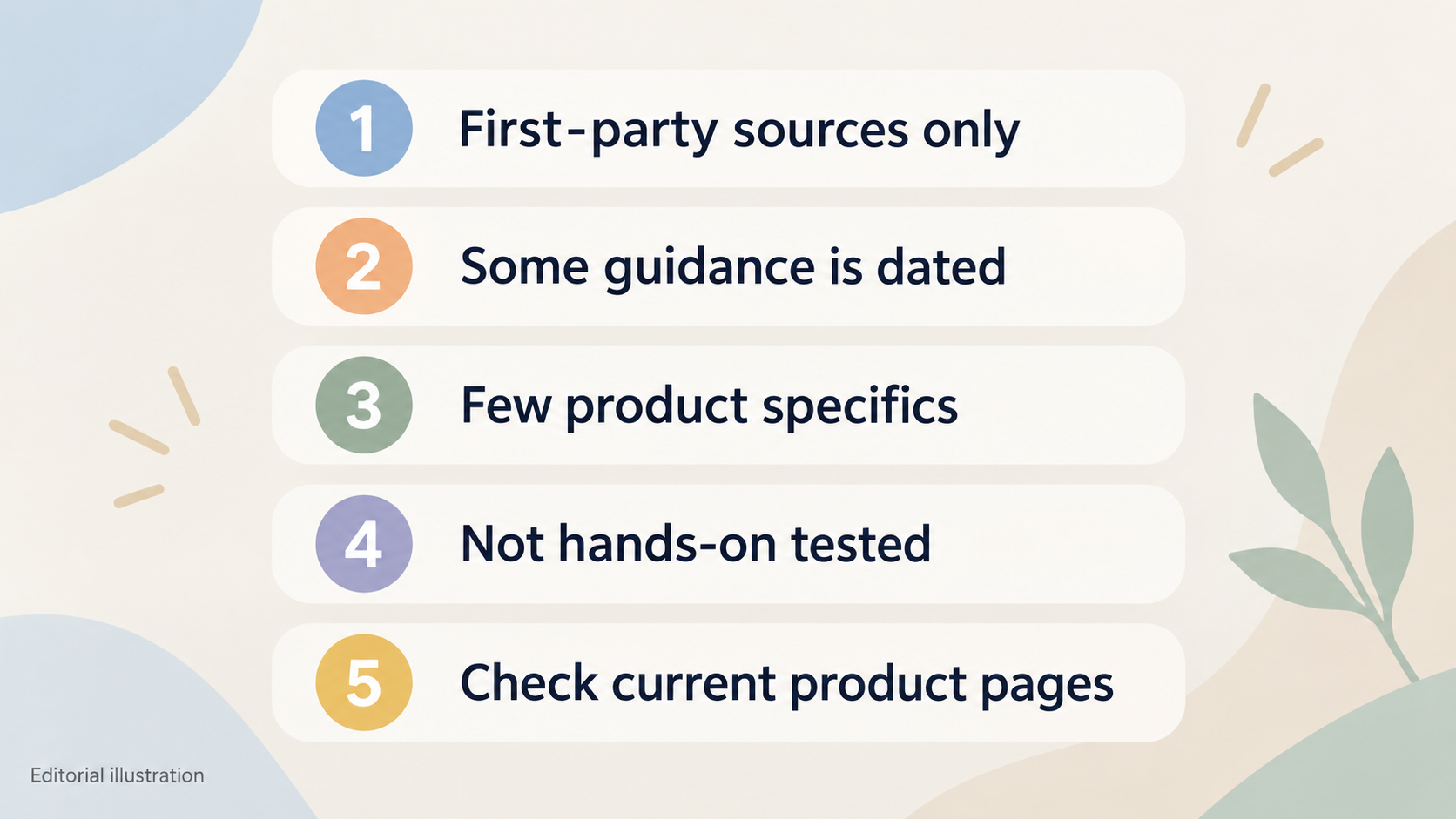
AI-generated generic editorial illustration — not a retailer product photo and does not depict the reviewed product or service. A numbered checklist of the limitations the section states about the evidence behind this guide, so readers know what to verify themselves.
The limits here are mostly about the evidence, not proven product faults. We have not found or claimed any product flaws.
- First-party sources. Belkin's pages are the company's own. Claims about testing and quality cannot be treated as independent verification.
- No warranty terms. The Warranty Center page we retrieved shows navigation rather than warranty length or terms. We cannot state coverage periods, so check the live page for your product.
- Dated device advice. Belkin's travel and power bank guides reference iPhone 12 to 14 and a 2023 framing. Some advice may not reflect current devices.
- No benchmarks. The sources give no side-by-side price, speed or capacity comparisons, so we cannot make value claims.
- High-wattage needs. The guides cite only a 15W to 100W range for USB-C ports. If you need the very highest wattage for a large laptop, check the specification on the product page.
Choosing Wattage, Capacity and Ports
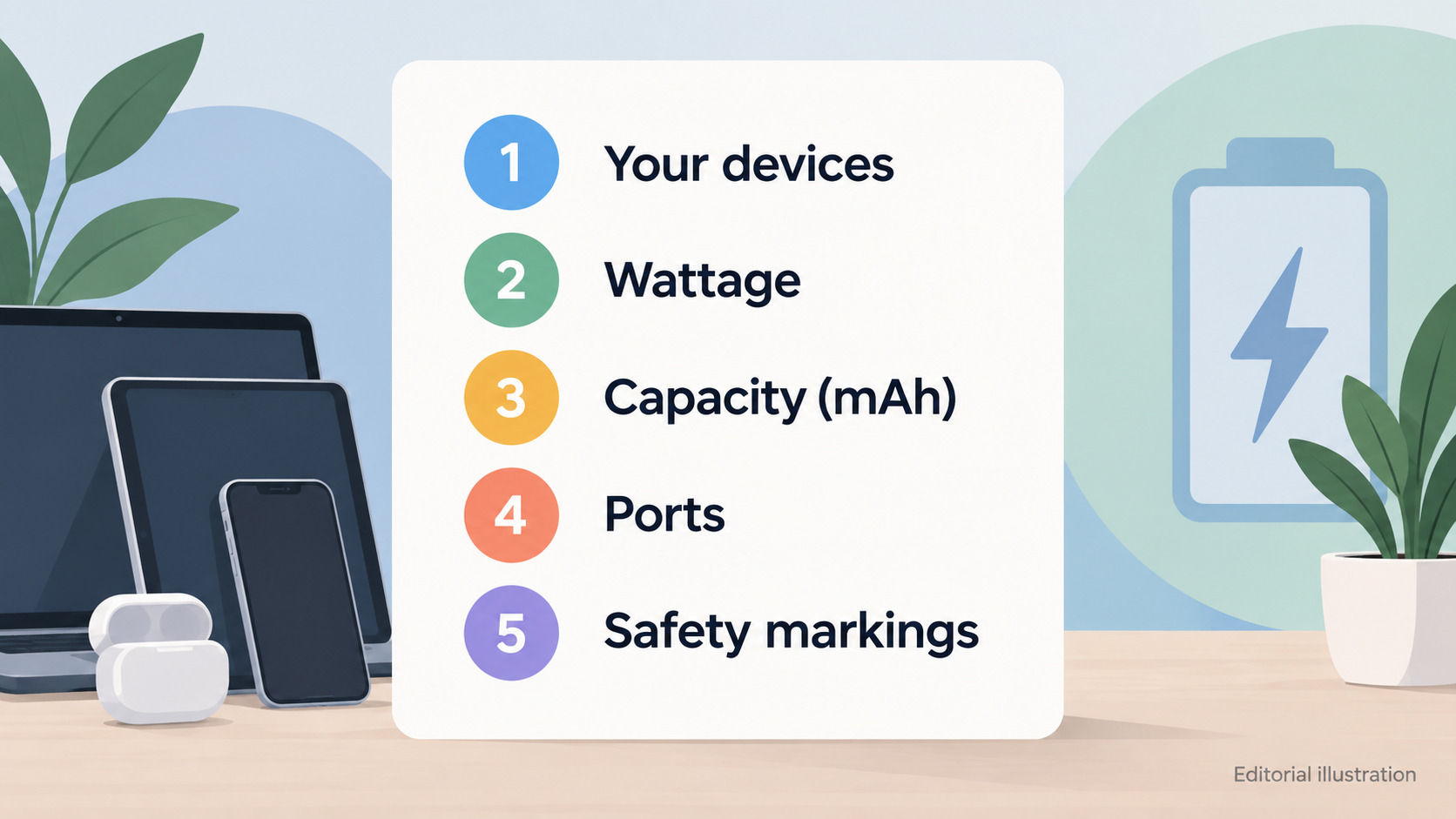
AI-generated generic editorial illustration — not a retailer product photo and does not depict the reviewed product or service. A numbered checklist of the selection points the section states, so readers can match a charger or power bank to their devices.
These criteria come from Belkin's guides, and they work for any brand.
1. Your devices. List what you charge. Belkin's guide says this drives the capacity, ports and wattage you need.
2. Wattage. Belkin says USB-C port wattage varies from 15W to 100W. A 20W charger is enough for a phone or dash cam, while tablets and high-end phones may suit 30W. Belkin says Apple recommends a 20W USB-C PD charger or higher for iPhones. It adds that PPS can optimise charging for the connected device. Tablets or laptops need higher wattage.
3. Capacity (mAh). Belkin describes 10K and 20K mAh as the most common power bank sizes. It says a 10K unit gives about one and a half iPhone 14 charges, or a phone plus accessories such as headphones.
4. Ports. Count how many devices you charge at once. That tells you how many ports you want.
5. Safety markings. Look for clear compliance marks such as CE and UKCA.
Two recharging points are worth remembering. Belkin says PD speeds up recharging a power bank. It also says charging a device while recharging the power bank itself takes longer.
Warranty, Support and Registration
AI-generated generic editorial illustration — not a retailer product photo and does not depict the reviewed product or service. One row of icons with short labels showing the support areas Belkin's public support structure lists, so readers know what to look for before buying.
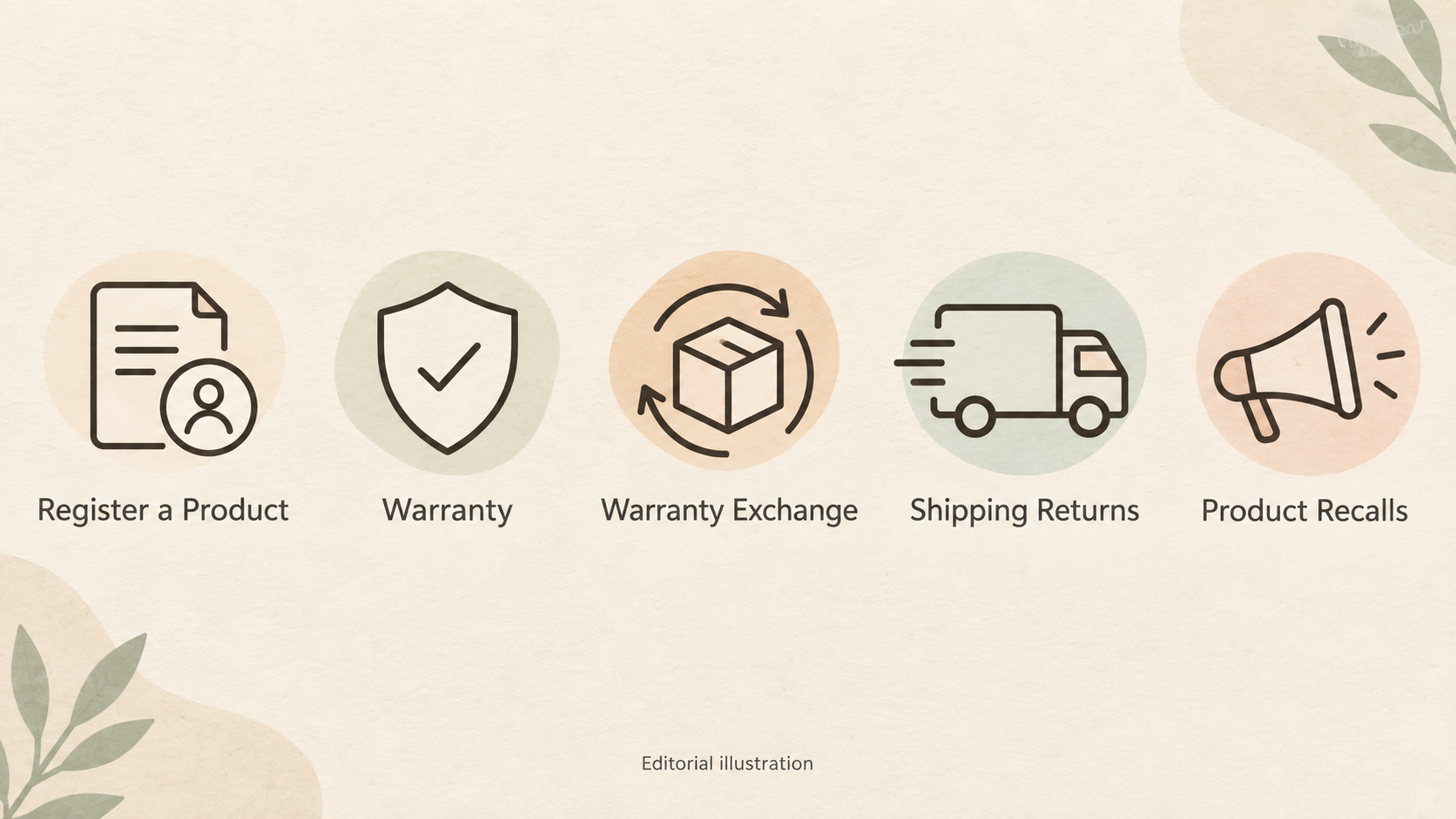
Belkin's Warranty Center sits within a Legal section, alongside the End User Licence Agreement, privacy policy and terms. Its Support menu lists a Support Center, product registration, screen protector registration, product recalls, connected equipment warranty, warranty exchange and shipping returns.
That is a fairly complete public structure. It tells you where to look, but not what you are entitled to. Warranty length and exclusions vary by product and must be confirmed on the live Warranty Center page. This guide does not assert them.
Before you buy, it is worth confirming:
- The warranty terms for the exact product you are considering.
- Whether the product needs registering, and how.
- Regional availability. The page we reviewed showed a US view with a prompt to change region.
UK consumer rights apply separately from any manufacturer warranty, so a retailer's obligations are a different matter from Belkin's support pages.
Who Belkin Suits and Who Should Skip It
These are conditional pointers, not a verdict.
Belkin may suit you if:
- You use an iPhone 12 or later and want magnetic wireless charging, which Belkin's guides emphasise.
- You travel and want a 10K or 20K power bank and a 20W to 30W USB-C charger, in line with Belkin's guidance.
- You value brand-published support pages and product registration.
Look elsewhere, or dig deeper, if:
- You need confirmed warranty terms. The pages we reviewed do not show them.
- You want independent test data or price comparisons. We have neither.
- You need high-wattage multi-laptop charging. Verify product specifications first.
Comparing Belkin with Anker, Samsung and Apple
Our sources cover Belkin only, so we do not rank it against Anker, Samsung or Apple. What we can offer is a way to compare.
Apple's 20W USB-C PD recommendation, as relayed by Belkin, is a baseline you can check any brand's charger against. Belkin's guide states that any charger of 20W or above is compatible with iPhones, so the choice can come down to features, support and cost.
When you compare brands, look at:
- Wattage, plus PD and PPS support.
- Capacity in mAh.
- Number of ports.
- Compliance marks.
- Warranty terms.
- Price.
Fill in that list for each brand from its current product page. That will tell you more than a general reputation.
How This Guide Was Built and What Is Dated
This guide draws on four official Belkin pages: the Warranty Center, About Us, the travel chargers buying guide and the power bank buying guide.
No hands-on testing or independent lab testing was carried out. Everything here is editorial interpretation of Belkin's public information.
Freshness matters. The power bank guide is framed for 2023 and the charger guide references iPhone 12 to 14, so device advice may be dated as of this October 2026 publication. Check live Belkin pages for current specifications, pricing and warranty terms before you buy.
Frequently Asked Questions
What wattage of Belkin charger do I need for my iPhone?
Belkin says Apple recommends a 20W USB-C PD charger or higher, and that any charger of 20W or above is compatible. If it also supports PPS, Belkin says it can optimise charging for the connected device. Check the specification on the product page for the model you choose.
Is a 10K or 20K Belkin power bank the better choice for travel?
Belkin describes 10K and 20K mAh as the most common sizes. It says a 10K unit gives about one and a half iPhone 14 charges, or a phone plus accessories such as headphones. It calls a 10K or 20K unit ideal for a set of headphones or two phones. Tablets or laptops need higher wattage. Check your airline's rules before flying.
Does Belkin's warranty cover every charging product, and how do I check?
We cannot say. Belkin lists warranty, warranty exchange, registration and returns information on its support pages, but the page we reviewed did not show terms. Confirm the terms for your specific product on the live Warranty Center page.
Is a Belkin charger safe to buy in the UK?
We cannot certify any product. Belkin's power bank guide advises buying only from a reputable brand with clear compliance markings such as CE and UKCA, so look for those. Belkin also says its products go through multiple tests before release. That is a company claim we have not verified.
Does this review reflect hands-on testing of Belkin products?
No. It is built from four official Belkin pages. No hands-on or independent lab testing was carried out.
Sources
Related reading
- Anker vs Belkin chargers and power banks: which is the better fit
- Anker charging review: power banks and chargers, strengths, limits and alternatives
- Apple chargers and MagSafe review: practical buying assessment
- How to choose a USB-C charger: wattage, ports and safety
Editorial information: About our editorial team · Read our editorial policy · Read our affiliate disclosure.